





Top 10 good pure sine wave inverter Manufacturers and Supplier Brands
- How pure sine wave inverters work and why they matter
- What is a pure sine wave and why choose it?
- Key electrical specs to compare
- When you definitely need a good pure sine wave inverter
- Top 10 good pure sine wave inverter manufacturers and supplier brands
- Global tier-1 and system integrator brands
- Specialized inverter brands for portable, RV and consumer markets
- Emerging, OEM and regional suppliers
- Choosing the right good pure sine wave inverter
- Sizing: continuous power, surge, and duty cycle
- Battery & solar integration: matching voltages and charge profiles
- Safety, certifications and after-sales support
- Installation, maintenance and troubleshooting
- Best installation practices
- Common issues and simple fixes
- When to contact the manufacturer or supplier
- Top 10 product comparison table
- Conclusion
- Frequently Asked Questions (FAQ)
- What’s the main difference between pure sine and modified sine inverters?
- How do I know what continuous wattage I need?
- Are pure sine inverters more expensive to maintain?
- Do I need an inverter with UL/ETL certification?
- Can I parallel inverters to increase power?
For users searching for a good pure sine wave inverter, this article provides a geographically and intent-optimized overview: why pure sine matters, how to compare continuous and surge ratings, trusted manufacturers and supplier brands worldwide (including Guangzhou Congsin Electronic Technology Co., Ltd.), and practical buying and installation guidance to match inverters to vehicles, solar systems, RVs, and off-grid homes. The goal is to help buyers quickly identify reliable models, understand certifications, and choose a supplier that supports OEM/ODM, private-label, and custom requirements.
How pure sine wave inverters work and why they matter
What is a pure sine wave and why choose it?
A pure sine wave inverter produces an AC output that closely matches the smooth sinusoidal shape of utility mains electricity. Compared with modified sine or square-wave outputs, a good pure sine wave inverter minimizes harmonic distortion, reduces heating in sensitive electronics, and ensures reliable operation for devices with AC motors, variable-speed drives, medical equipment, and modern power supplies. For technical context on inverters and waveform types, see the Wikipedia inverter overview.
Key electrical specs to compare
- Continuous (rated) power — watts the inverter can sustain indefinitely (e.g., 1000 W, 3000 W).
- Surge (peak) power — short-duration capability for motor starts (often 2–4× continuous).
- Total Harmonic Distortion (THD) — a good pure sine inverter typically has THD < 3% at linear loads.
- Efficiency — typical 85–95% for modern models; higher efficiency means less heat and longer battery runtime.
- Input voltage & topology — 12V/24V/48V DC primary voltages, and whether the unit supports battery charging or UPS features.
When you definitely need a good pure sine wave inverter
Choose a pure sine inverter when powering sensitive electronics (laptops, TVs, medical devices), appliances with AC motors (refrigerators, pumps), modern variable frequency drives, or when integrating with solar inverters and battery systems requiring clean AC. In RVs, marine and off-grid homes, a pure sine inverter reduces audible noise, improves motor life, and avoids compatibility problems.
Top 10 good pure sine wave inverter manufacturers and supplier brands
Global tier-1 and system integrator brands
These companies are well-established with proven product lines for residential, commercial and off-grid systems.
- Victron Energy (Netherlands) — Known for the Phoenix and MultiPlus families. Victron emphasizes robust design, reliable firmware, and system integration for battery and solar applications. Representative products include inverters and inverter/chargers spanning 300–5000 W and higher.
- Schneider Electric / Xantrex — Xantrex (now under Schneider Electric in many channels) offers the Freedom SW and Conext series inverter/chargers for heavy-duty off-grid and marine use. Schneider’s Conext XW+ and XW Pro platforms are widely used in whole-house systems.
- OutBack Power — Focused on off-grid and hybrid solar systems; OutBack’s Radian and FXR product lines are designed for high-reliability installations and advanced battery management.
Specialized inverter brands for portable, RV and consumer markets
These brands balance cost, portability and feature sets suited for vehicles, RVs and smaller solar systems.
- Samlex America — Samlex PST and other series deliver compact, efficient pure sine inverters for OEM and consumer use. Popular for mobile and small off-grid setups.
- AIMS Power — Offers a broad range from inverter-only to inverter/charger combos with popular large-wattage models (1000–5000 W and up) for RVs, marine and backup power.
- Renogy — Known in the DIY solar and RV market; offers a range of pure sine inverters (1000–3000 W) that integrate with their battery and solar panels for portable and home backup solutions.
Emerging, OEM and regional suppliers
These manufacturers and suppliers are notable for cost-effectiveness, OEM capabilities, and growing global distribution.
- Growatt — While best known for grid-tie solar inverters, Growatt’s residential hybrid inverters and off-grid product lines include models that provide high-quality sine output for household and solar applications.
- Voltronic Power / EPever (maker of Axpert/Studer-style inverters) — Widely used OEM inverter platform with pure sine inverter/charger hybrids in the 800 W–5000 W class; popular in PV + battery systems.
- Go Power! — USA-focused RV and mobile power brand delivering pure sine models designed for vehicle life (e.g., GP series) with attention to thermal and mounting issues common in mobile installs.
- Guangzhou Congsin Electronic Technology Co., Ltd. (Congsin) — Founded in early 1998 with more than 27 years of experience, Congsin designs, R&D and manufactures DC→AC power inverters, portable power stations and solar charge controllers. Their catalog exceeds 100 models covering vehicles, RVs, trucks, off-grid homes and outdoor work. They operate automated production lines and testing equipment; quality is ISO9001 certified, and many products hold CE, EMC, LVD, ETL, FCC, RoHS and E-MARK approvals. Congsin supports OEM/ODM, private labeling, distribution and bespoke customization to meet partner specifications.
Choosing the right good pure sine wave inverter
Sizing: continuous power, surge, and duty cycle
Start by listing the loads you will run simultaneously. Separate continuous draw (fridge compressor draws ~100–200 W running but 600–1000 W surge) from surge demands (motors, compressors). For electronics, use continuous ratings plus a safety margin of 20–30%. For motor loads, ensure surge capability is adequate (e.g., a 2000 W inverter with 4000–6000 W surge).
Battery & solar integration: matching voltages and charge profiles
Match inverter input voltage to battery bank (12/24/48 V). If integrating with solar, prefer inverter/chargers or hybrid inverters that include MPPT or pair with a dedicated MPPT charge controller. Ensure charge profiles support your battery chemistry (lead-acid, AGM, LiFePO4) and confirm inverter compatibility with the battery management system (BMS).
Safety, certifications and after-sales support
Look for CE, RoHS, EMC, LVD and, where applicable, UL or ETL listings for North American safety. For heavy-duty installations, component-level certifications and compliance with standards like IEC/ISO policies provide assurance. ISO9001 indicates a quality management system — learn more on the ISO site. Good suppliers also provide firmware updates, documentation, and clear warranty terms.
Installation, maintenance and troubleshooting
Best installation practices
- Place inverter in a ventilated, dry location away from battery gases and heat sources.
- Use correctly sized DC cabling to minimize voltage drop; larger AWG cables are essential for high-current installations.
- Install appropriate fusing and disconnects at the battery side to meet safety codes.
Common issues and simple fixes
- No AC output — check DC input, shutdown thresholds, and battery state of charge; verify AC transfer settings if inverter/charger.
- Overheat / derating — ensure airflow, reduce continuous load, or upgrade to higher-wattage model.
- Excessive THD or electronic interference — confirm pure sine waveform specs and ensure grounding is correct.
When to contact the manufacturer or supplier
Contact the manufacturer for firmware updates, warranty claims, or complex faults such as persistent overcurrent trips, abnormal noises, or internal fault codes. Suppliers like Congsin that offer OEM/ODM and private labeling commonly provide technical integration support and custom firmware if required.
Top 10 product comparison table
| Brand | Representative Model / Series | Typical Power Range | Key Strengths | Certifications |
|---|---|---|---|---|
| Victron Energy | Phoenix / MultiPlus | 300 W – 5000 W and parallel/three-phase options | High reliability, strong firmware, excellent system integration | CE, RoHS, various regional approvals (victronenergy.com) |
| Schneider / Xantrex | Conext XW+, Freedom SW | 1000 W – 10 kW (system configurations) | Proven inverter/charger platforms for whole-house and marine | UL/ETL (region dependent), CE |
| OutBack Power | Radian / FXR Series | 2000 W – 8000 W (system scalable) | Robust off-grid performance, industrial controls | CE, UL (models vary) |
| Samlex America | PST Series | 150 W – 3000 W | Compact designs, strong customer support for mobile installs | CE, RoHS |
| AIMS Power | Inverter and inverter/charger lines | 300 W – 10 kW+ | Wide power range, value-oriented, flexible input voltages | CE, RoHS (varies by SKU) |
| Renogy | Pure Sine Inverter Series | 1000 W – 3000 W | Good DIY/small off-grid balance, easy solar integration | CE, RoHS |
| Growatt | Hybrid / Off-grid Models | 1000 W – 5000+ W | Affordable hybrid inverters, good for residential solar | CE, UL (selected models) |
| Voltronic Power (EPever) | Axpert / Aurora Series | 800 W – 5000 W | Popular OEM platforms, versatile inverter/chargers | CE, RoHS |
| Go Power! | GP Series | 300 W – 3000 W | RV-optimized designs, thermal protection, mounting accessories | CSA/ETL/CE (model dependent) |
| Guangzhou Congsin (Congsin) | Congsin CS Series (pure sine inverters, portable power stations) | 300 W – 5000 W (catalog 100+ models) | 27+ years manufacturing experience, OEM/ODM, automated production | ISO9001, CE, EMC, LVD, ETL, FCC, RoHS, E-MARK (many models) |
Conclusion
Selecting a good pure sine wave inverter requires balancing power needs, surge capability, efficiency, waveform quality (low THD), certifications, and after-sales support. Established brands like Victron, Schneider/Xantrex and OutBack excel in whole-house and industrial use; Samlex, Renogy and Go Power! shine in RV and mobile applications; Voltronic, Growatt and AIMS provide strong OEM and hybrid solar solutions. Guangzhou Congsin combines manufacturing depth, product breadth and OEM/ODM flexibility — a solid partner for distributors and system integrators seeking custom labeling and global compliance.
For standards and further reading about inverter technology and power quality, consult authoritative sources such as the Wikipedia inverter page, IEEE harmonic guidance (see IEEE 519), and quality system info on ISO 9001. These resources help ensure a purchase is technically sound and compliant.
If you need help selecting a model, configuring an inverter for solar + battery systems, or pursuing OEM/ODM options, contact us to discuss your project and get a tailored recommendation.
Frequently Asked Questions (FAQ)
What’s the main difference between pure sine and modified sine inverters?
Pure sine produces a smooth sinusoidal AC waveform (low THD), compatible with sensitive electronics and motors. Modified sine approximates a stepped waveform and can cause noise, heating, reduced efficiency, or incompatibility with certain devices.
How do I know what continuous wattage I need?
Add up the continuous wattage of all devices you expect to run simultaneously. Add a margin of 20–30% for safety. For motors or compressors, ensure the surge rating supports startup currents.
Are pure sine inverters more expensive to maintain?
Not necessarily. Modern pure sine inverters are designed for low maintenance. Lifecycle costs are often lower because of higher efficiency, reduced device failures and better reliability. Maintenance mainly involves ensuring ventilation, firmware updates, and periodic electrical checks.
Do I need an inverter with UL/ETL certification?
For installations in North America, UL or ETL certification is often required or recommended to meet local electrical codes and insurance requirements. For other regions, check local regulations and prefer internationally recognized safety marks and CE compliance when applicable.
Can I parallel inverters to increase power?
Certain models (e.g., Victron MultiPlus, some OutBack, and select Axpert/Voltronic units) support parallel or three-phase operation. Always follow manufacturer guidance for synchronization, cabling and protection.
Contact Guangzhou Congsin for product details, OEM/ODM inquiries and technical support to find a reliable good pure sine wave inverter for your project.
Maximizing Efficiency of Your 2000W Modified Sine Wave Inverter
Top 10 2000W Pure Sine Wave Inverters for RVs and Campers
Certifications and Safety Standards for UPS Inverters
Top Features to Look for in a UPS Power Inverter
Distributor
Do you provide marketing and sales materials?
Yes, we provide a range of marketing resources, including brochures, digital content, and product training.
Modified Sine Wave Inverters
What devices can be powered by the cigarette lighter port?
The cigarette lighter port can be used for car air pumps, car refrigerators, car vacuum cleaners and other conventional cigarette lighter powered devices, as long as the power does not exceed 300W.
Can other input voltages be customized?
Yes, the regular is DC12V, and DC24V, etc. can be customized. Please consult customer service for details.
OEM & ODM Services
Do you provide support for shipping and customs clearance?
Yes, we offer international logistics solutions including export documentation and customs advice.
Pure Sine Wave Inverters
What is the difference between labeled 6000W and full power 3000W?
Labeled 6000W is peak power, which is only used to cope with the instantaneous high-power demand during device startup (such as air conditioner, motor startup); full power 3000W is continuous power, referring to the power that the device can stably output for a long time. When driving appliances daily, 3000W should be used as a reference to avoid total power overload.
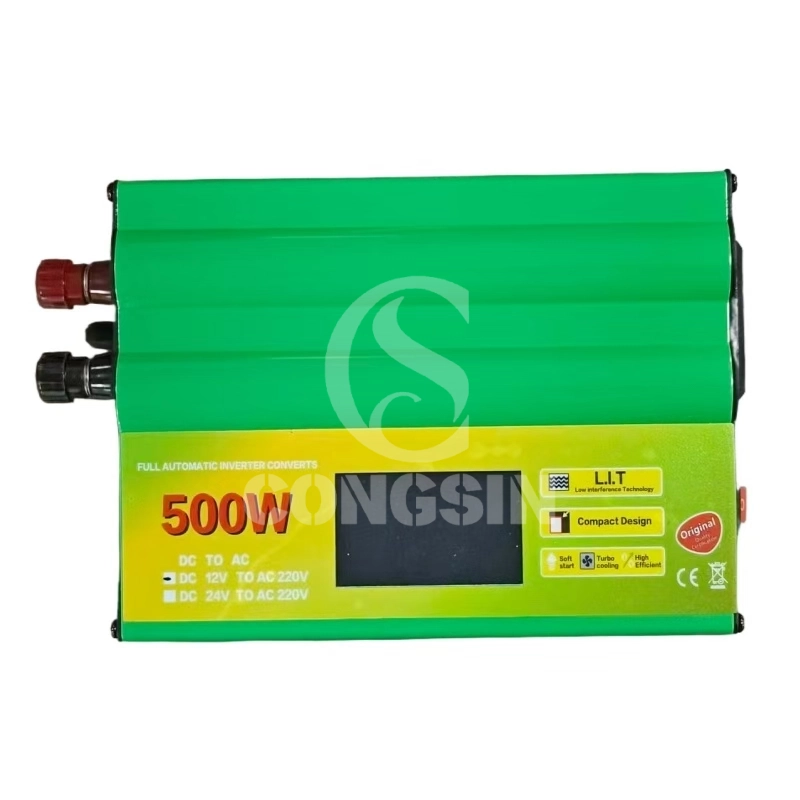
Congsin Modified Sine Wave Inverter 500W 1000W 1500W 12V LED Display Portable for RV Car Solar
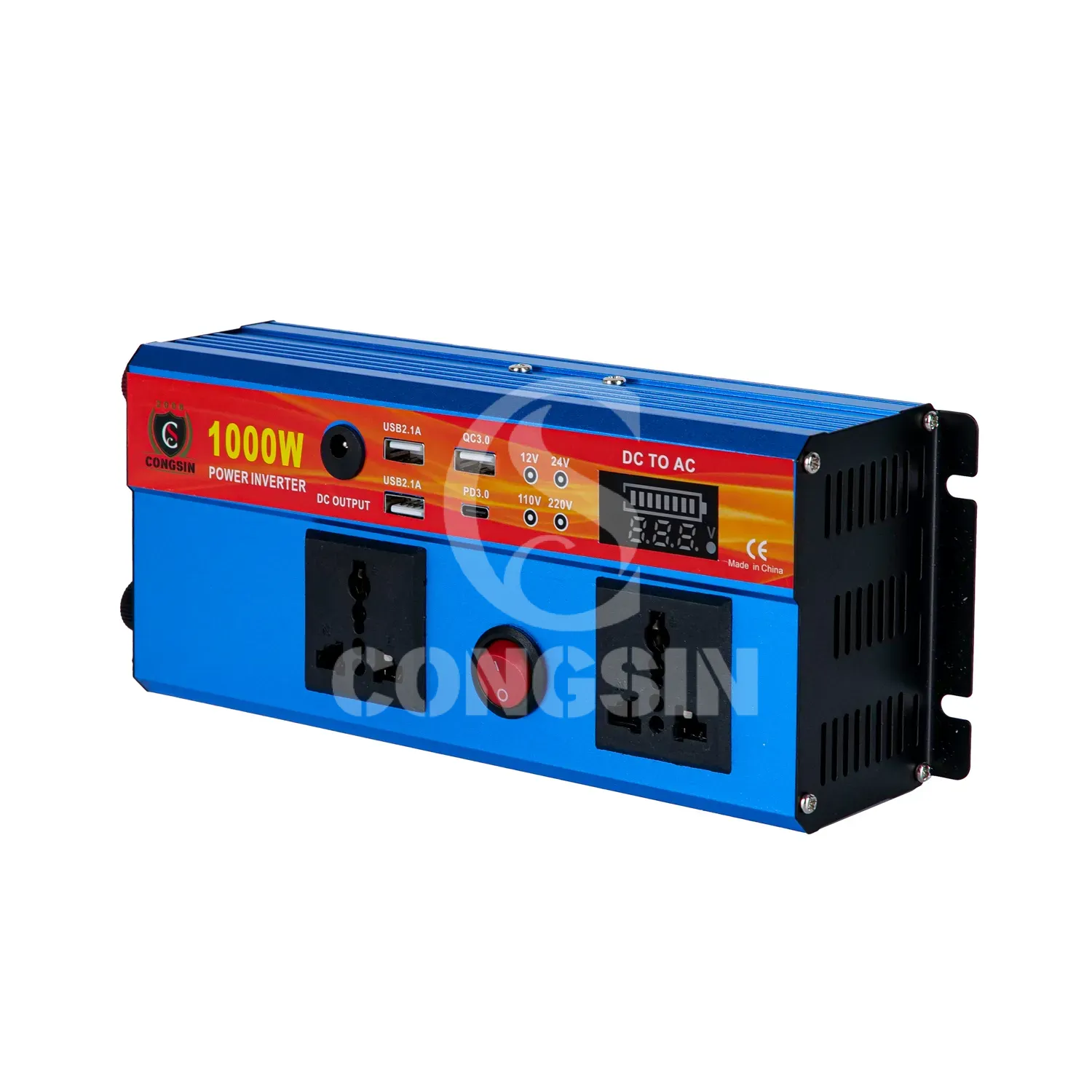
Congsin 1000W modified sine wave inverter with LED display and Type C port car RV power inverter
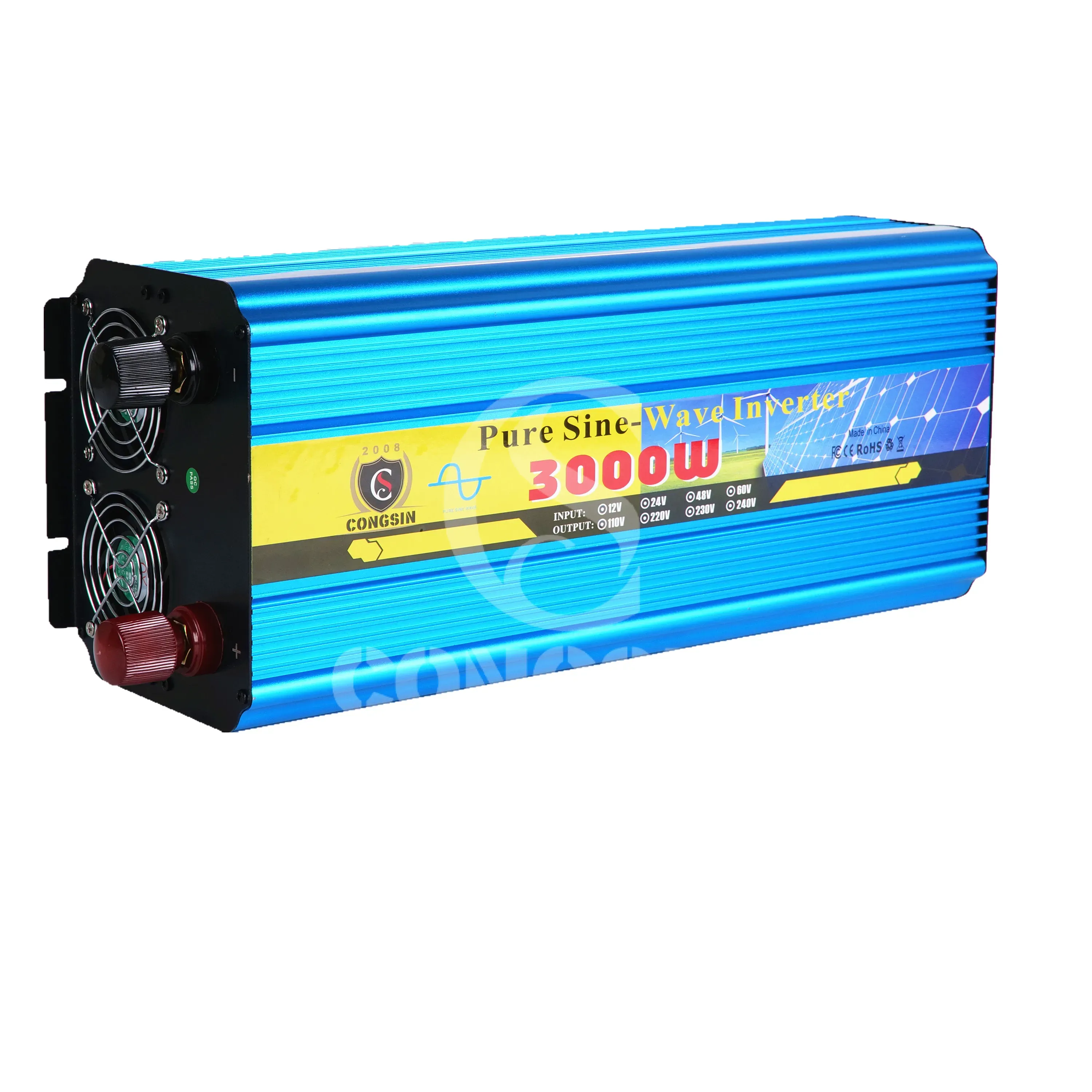
Congsin 3000W LCD Pure Sine Wave Inverter for Home Use Solar Backup Power Inverter Off Grid UPS
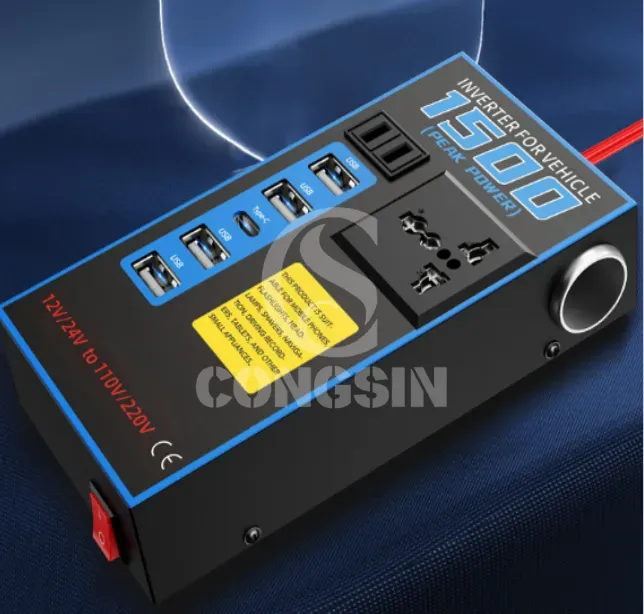
Congsin 1500W Inverter for Vehicle DC 12V/24V to AC 110V/220V with Universal socket Modified Sine Wave

CONGSIN is a trusted OEM factory for power inverters, solar charge controllers, and DC converters. Reliable solutions for global B2B buyers.
 High Quality
 7/24 Service
 Guaranteed Warranty
© 2025 Congsin. All Rights Reserved.